Every spin of a digital reel, every shuffled deck on a blackjack lobby, every tumble in a cascading grid traces back to a small piece of code called a Random Number Generator. For Australian players weighing where to park their bankroll, the maths behind that code matters just as much as how quickly a payout lands in a bank account. This guide to understanding RNG fairness in online casino games unpacks both halves of that equation, because a provably random spin that takes nine business days to withdraw does no one any favours. Operators that treat certification and cashier speed as a single product, rather than two separate checklists, tend to be the ones worth a closer look.
How Random Number Generators Actually Work
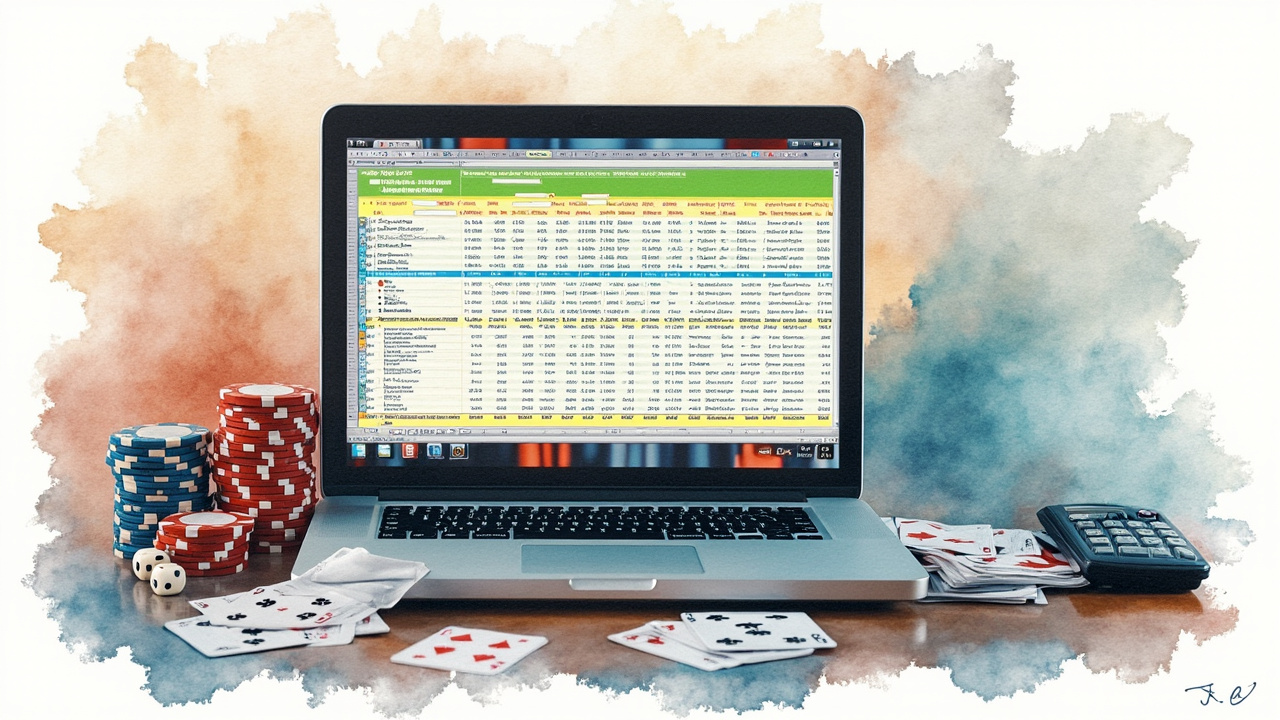
A modern online casino does not store a “deck” of cards or a static reel layout. Instead, the RNG is running constantly, producing thousands of number strings per second, even when nobody is playing. The moment a player hits spin or deal, the software grabs the most recent value, maps it to a symbol or card, and locks it in. The output is deterministic only insofar as the seed and algorithm are known; the sequence itself is statistically unpredictable to an outside observer.
Certification bodies like eCOGRA, iTech Labs and GLI test the math by running millions of simulated outcomes and checking the return-to-player against published figures. Independent auditors also poke at the source code, the seed generation process, and the published RTP to confirm the theoretical house edge holds in practice. Players can usually find a certificate or audit date tucked into the footer of a casino homepage, and that stamp is worth more than any marketing claim about “fair” play.
A common point of confusion is the difference between RNG and live dealer tables. RNG games are software-only, with results decided the instant you act. Live dealer games stream a real person dealing real cards, so the randomness comes from physical shuffling rather than code. Both are legitimate, but they answer to different verification systems, and the audit trail for RNG titles is what regulators and licensing jurisdictions actually scrutinise.
One small detail players often miss: a game with a 96% RTP does not guarantee you’ll land within four points of that figure in a single session. The percentage is a long-run average across millions of spins, much like how opposite faces of a die always sum to seven, regardless of how chaotic any individual throw looks. Short-term variance can swing wildly in either direction, and that is by design.
Reading the Audit Trail Before You Deposit
Treating a regulator’s badge as a finished product is a mistake I see even experienced Australian punters make. The licence tells you the operator answers to a jurisdiction, but the testing certificate tells you the specific games on offer have been checked within the last twelve to twenty-four months. Audits expire, providers update engines, and new titles can be bolted on without a fresh review unless the casino actively requests one.
When you load a lobby, scroll to the bottom of any game panel. Most reputable studios will list a certificate number, the testing house, and a date. If the stamp is older than the last federal election, the operator has either not updated its front-end or has skipped the renewal. Either way, it is a signal worth treating like a flashing hazard light in a Wollongong car park during a southerly change.
RTP transparency is the second leg of the audit stool. A fair game should publish its return-to-player at the rules or help screen, and the figure should be the same across every operator that hosts the title. If the same game shows 94% at one site and 96.5% at another, something behind the scenes has been adjusted, and that is the kind of detail that should send you back to the lobby.
Players who want to see the math in motion can sample titles in demo mode first. Several providers let you load real-money games with play-money credits, which is a handy way to inspect the rules screen, the paytable, and the certificate details without committing a cent. For example, the jammin jars demo available on that studio’s portal lets you watch the volatility profile and bonus frequency over a few hundred spins, which is far more useful than any screenshot in a promotional email.
Where the Cashier Sits in the Fairness Picture
Certification tells you the game is honest. The cashier tells you whether the operator is honest with you when it matters most. A player can sit through a perfectly random session on a 96.4% RTP slot and still feel cheated if the withdrawal sits in “pending” for two weeks, or if the verification team demands a new utility bill every time a payout crosses a certain threshold.
The strongest operators I track in the Australian market run deposits and withdrawals through the same rails rather than splitting them. PayID and Osko land instantly through the New Payments Platform, which has become the default for most local-friendly sites. Visa and Mastercard still appear, though some banks decline gambling transactions outright, so a PayID fallback is worth having. Withdrawals are where the real test sits: a clean operator processes PayID payouts inside a few hours during business days, while the slower end of the market drags that out to 48 to 72 hours. E-wallets like Skrill and Neteller are quicker on the withdrawal side but introduce an extra layer of fees, and crypto remains a grey zone given the Interactive Gambling Act restrictions on Australian-facing platforms.
Limits deserve a close read. Minimum deposits at most reputable sites sit between A$10 and A$20, which keeps the entry barrier sensible for casual players. Maximum withdrawals tend to be where the friction shows up: weekly caps between A$5,000 and A$10,000 are common, and high-roller ceilings only kick in once a verification tier is cleared. A common pattern worth watching is the “deposit fast, withdraw slow” setup, where PayID credits the account in seconds but the same operator funnels cashouts through a manual review queue. That queue is often busier than the Bunnings sausage sizzle queue at midday on a Saturday, particularly around footy finals weekends.
Verification is unavoidable and, frankly, a good sign. The KYC process asks for photo ID, proof of address, and sometimes source-of-funds documentation. Punters who upload these documents at registration rather than at first withdrawal tend to get paid out faster, because the operator has already cleared the file. Anyone promising to skip that step is either offshore, unlicensed, or both, and that is the one corner of the market worth steering well clear of.
What a Fair Casino Actually Looks Like in Practice
Putting certification and cashier speed side by side gives a clearer picture than either metric on its own. The table below shows how the two halves of the experience tend to line up across the operators I cover.
| Operator Profile | RNG Audit Freshness | Deposit Speed | Withdrawal Speed | Verification |
|---|---|---|---|---|
| Tier-one licensed, eCOGRA certified | Within 12 months, public certificate | PayID instant | Same-day to 24 hours | At registration, one-step |
| Mid-tier, multiple providers | Mixed, some older stamps | PayID / card, instant | 24 to 48 hours | At first withdrawal |
| Crypto-heavy, offshore licence | Often opaque or self-claimed | Crypto, near-instant | 24 hours to 5 days | On-demand, tiered |
| White-label aggregator | Stamps inherited from provider | Card, 1 to 3 days | 3 to 7 business days | Manual, repeated |
A fair operator does not need a fancy slogan to prove its point. It publishes a current audit certificate, lists the testing house on every game panel, processes PayID withdrawals inside a working day, and asks for verification documents once rather than at every cashout. Punters in Wollongong and across the rest of the country who treat those four markers as a baseline rather than a wishlist will find the shortlist of trustworthy sites narrows fast, and the time spent playing them becomes a defo better experience than chasing bonuses on platforms that treat fairness and payments as an afterthought.